On 13 November 2002 the single-hull tanker Prestige, loaded with 76,972 tonnes of heavy fuel oil, was damaged in heavy weather off Cape Finisterre in Galicia. Six days later, after being towed away from the coast, she broke in two and sank in water more than 3,500 m deep. About 63,000 tonnes of her cargo was lost.
The oil reached the coasts of Spain, France and Portugal’s waters, and traces reached southern England. This article sets out the ship’s history, the six days between damage and sinking, the dispute over a place of refuge, the clean-up, the long legal case and the changes to tanker rules. The main sources are the Bahamas Maritime Authority’s investigation, the European Commission, ITOPF, Cedre and the IOPC Funds.
| IMO number | 7372141 |
| Built | 1976, Hitachi Zosen, Japan |
| Original name | Gladys, until 1988 |
| Flag at loss | Bahamas |
| Owner | Mare Shipping Inc. |
| Manager | Universe Maritime, Athens |
| Class | American Bureau of Shipping |
| Length overall | 243.5 m |
| Breadth | 34.4 m |
| Gross tonnage | 42,820 |
| Deadweight | 81,589 tonnes (European Commission); 81,564 tonnes (BMA) |
| Cargo | 76,972 tonnes of heavy fuel oil |
| Damaged | 13 November 2002, off Cape Finisterre |
| Broke in two and sank | 19 November 2002 |
The ship
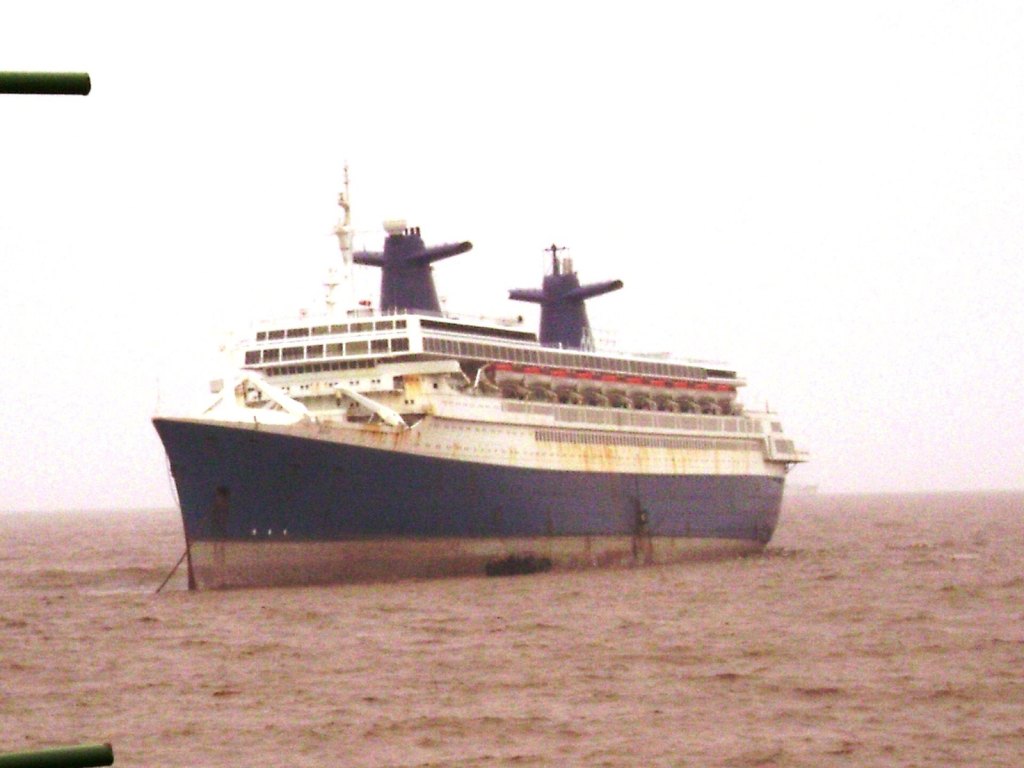
Prestige was built in Japan in 1976 by Hitachi Zosen. The Bahamas Maritime Authority, her flag state, names the Sakurajima yard at Osaka and records that she was one of four sister ships. She was launched as Gladys and carried that name until 1988. From 1994 she was owned by Mare Shipping Inc., registered in the Bahamas and managed from Athens by Universe Maritime.
She was classed by the American Bureau of Shipping. The European Commission’s technical note records that her last special survey and dry-docking took place at Guangzhou, China, in May 2001, with major steel renewals, and her last annual survey at Dubai in May 2002. There were no outstanding class or statutory items. As a single-hull Category 1 tanker, her phase-out date under the rules then in force was 11 March 2005.
Damage off Cape Finisterre
Prestige sailed from Ventspils in Latvia on 31 October 2002, bound for Gibraltar for orders, having loaded at St Petersburg and Ventspils. Cedre gives her final destination as Singapore. In the afternoon of 13 November she was in the traffic separation scheme off Cape Finisterre, in west-northwesterly winds and a significant wave height of about 6 m.
At about 1500 she was struck by a heavy sea. A loud bang was heard and she quickly took a list of about 20 degrees to starboard; Cedre reports 30 degrees. Tank cleaning covers were displaced, spray came from the empty No. 3 starboard wing ballast tank, and oil escaped from openings in other starboard tanks.
At about 1545 the master ordered the No. 2 port after wing tank and No. 3 port wing tank to be flooded by gravity. By 2200 the list had been reduced to about 5 degrees. Flooding on the opposite side corrected the heel but added weight to a hull that was already damaged.
The crew numbered 27. Two helicopters took off 24 of them by about 1805, in winds of force 9. The master, chief officer and chief engineer stayed aboard. Despite their efforts, a tow could not be connected until about 0900 on 14 November, after more personnel had been put aboard.
Towed away from the coast
The master asked to be taken to a place of refuge. The Spanish authorities instead ordered the ship to be towed northwest, away from the coast. On the morning of 14 November a Spanish surveyor boarded with engine room staff and ordered the main engine restarted. The master initially objected, warning that vibration might cause further damage, but complied.
A salvage team from Smit was engaged and asked permission to take the ship to a place of refuge; the request was refused. The team boarded at about 0300 on 15 November and repeated the request, which was again refused. They were told to take the ship 120 miles off the coast, under an undertaking signed before they were allowed out to her.
On 15 November the side shell continued to break away, and oil began to escape from breached cargo tanks. Cedre records a tear of about 35 m in the starboard side that day. The master, chief officer and chief engineer were taken off at about 1800, after 51 hours of continuous duty. Later the tow turned southwest in search of calmer water, but was not allowed into Portugal’s exclusive economic zone.
The breakup on 19 November
At about 0800 on 19 November the hull was seen to be buckling, and the ship broke in two. By 1125 both sections were vertical in the water. The after section sank at 1145 and the forward section at 1615. The Bahamas investigation gives a charted depth of 3,600 m at the position.
Sources describe the position in different ways. The Bahamas investigation puts it some 130 miles off the northwest coast of Spain, Cedre about 130 nautical miles west-southwest of Cape Finisterre, the Spanish Supreme Court 138 miles from the coast, the IOPC Funds about 260 km west of Vigo and ITOPF about 170 miles west of Vigo. The IOPC Funds give the depths of the two sections as 3,500 m for the bow and 3,830 m for the stern.
What the investigation found
The Bahamas Maritime Authority concluded that the probable cause of the first breach was a heavy sea revealing a weakness in the No. 3 starboard wing tank. It found insufficient evidence to establish the cause of that weakness with certainty. It considered an explosion, a collision with a floating object, overloading and earlier grounding damage to be unlikely.
The causes it could not rule out, alone or in combination, were contact damage from an earlier ship-to-ship cargo transfer, fatigue, failure of the bulkhead between the No. 3 starboard and No. 2 starboard after wing tanks, the fitting of new steel to old, and corrosion. Fatigue was therefore one possible factor among several, not an established cause.
The authority also concluded that a place of refuge could well have led to a much more favourable outcome. It noted that when the master first asked, the ship was near the coast, listing only about 5 degrees, under tow and with her engine available. It found that the weather inshore was less severe than offshore. These are the findings of the flag state. The Spanish official involved in the refusal of refuge was later among the defendants in the criminal case, and was acquitted.
Oil on the coast
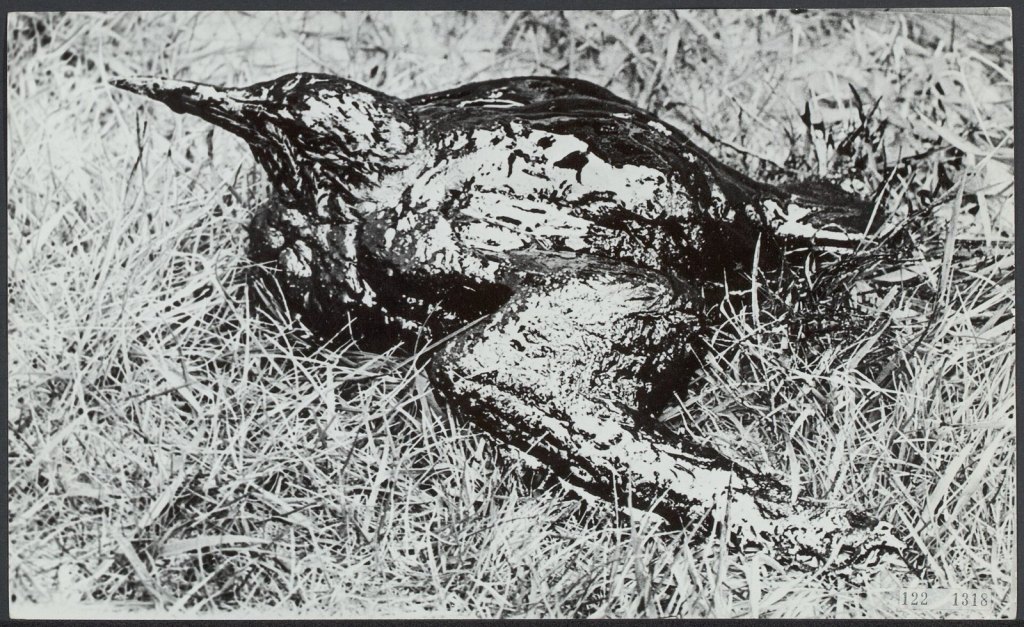
Because the cargo was highly persistent, the oil drifted for weeks with winds and currents. It first came ashore on the rocky coast of Galicia, then moved into the Bay of Biscay, reaching the north coast of Spain and the Atlantic coast of France as far as Brittany. The IOPC Funds record traces in the Channel Islands, the Isle of Wight and Kent.

ITOPF describes the offshore response, with vessels from Spain and nine other countries, as probably the largest of its kind. More than a thousand fishing vessels took part in sheltered waters. About 50,000 tonnes of oil and water mixture were recovered at sea. ITOPF puts the length of affected shoreline at about 1,900 km; Cedre gives 2,900 km across France, Spain and Portugal.
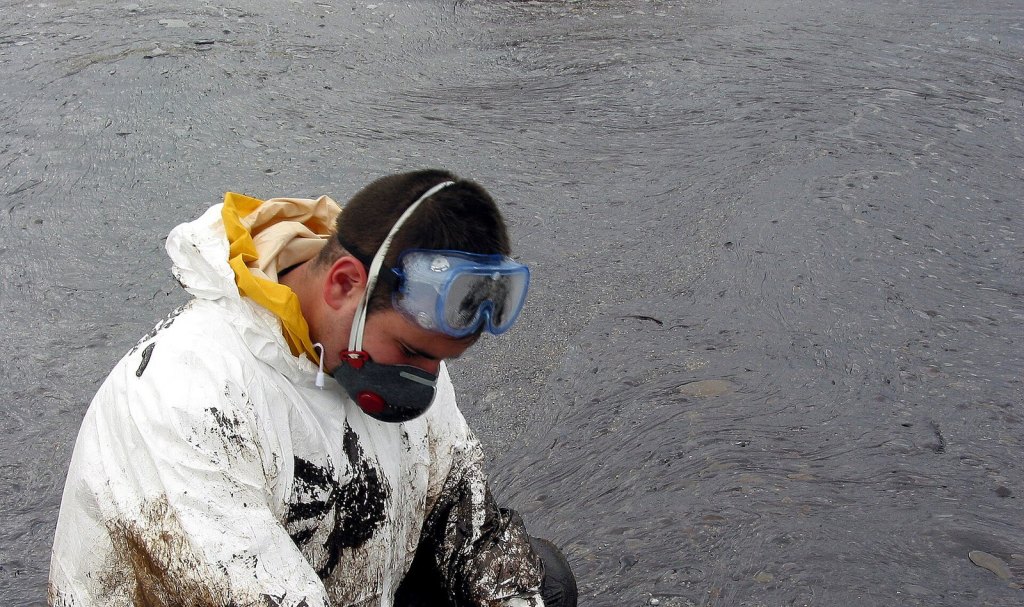
On shore, Spain’s coast was cleaned largely by hand by more than 5,000 military personnel, local government staff, contractors and volunteers. Remobilised oil re-oiled cleaned areas. Some 141,000 tonnes of oily waste were collected in Spain and 18,300 tonnes in France. Fishing was banned along about 90 per cent of the Galician coast, and all bans were lifted by October 2003.

Oil left in the wreck
The Spanish Government estimated that about 13,800 tonnes of cargo remained in the wreck. Between May and September 2004 some 13,000 tonnes were removed from the forward section using shuttle tanks designed for the job, and about 700 tonnes were left in the after section. ITOPF gives the cost of the operation as about €100 million.

The court case
A criminal trial opened at A Coruña in October 2012. On 13 November 2013 the court acquitted the master, the chief engineer and the former head of the Spanish merchant marine of crimes against the environment. The master was convicted only of disobedience, for initially refusing the tow, and sentenced to nine months.
On 14 January 2016 the Spanish Supreme Court overturned the master’s acquittal. It convicted Apostolos Mangouras of reckless damage to the environment and sentenced him to two years. It confirmed the acquittals of the chief engineer and the official. The owner had subsidiary civil liability, the insurer, the London P&I Club, direct liability up to its policy limit, and the IOPC Fund liability within the Convention limits.
The Supreme Court worked from the facts found at trial, including that the crew did not know of the structural defects that caused the damage. It held the master reckless for undertaking the voyage as he did, in an ageing ship with known operational defects and loaded more than 2,000 tonnes beyond her limit at Ventspils, and for his handling of the emergency, including the decision to right the ship by flooding tanks.
Changes to tanker rules
Prestige did not create the double-hull requirement. IMO had amended MARPOL in 1992 to require double hulls on tankers of 5,000 dwt and above ordered after 6 July 1993. After the Erika spill of December 1999, a faster phase-out of single-hull tankers was adopted in April 2001 and entered into force in September 2003.
After Prestige, IMO’s environment committee held an extra session in December 2003 and adopted a further accelerated phase-out, in force from 5 April 2005. A new regulation banned single-hull tankers of 5,000 dwt and above from carrying heavy grade oil from that date. The final date for Category 2 and 3 tankers was brought forward from 2015 to 2010.
The question of refuge was addressed separately. In November 2003 the IMO Assembly adopted guidelines on places of refuge for ships in need of assistance, and a resolution recommending maritime assistance services. The guidelines were revised in 2023. They do not require a coastal state to admit a damaged ship, but set out how the risks of admitting her and of keeping her at sea should be weighed.
Timeline
| Date | Event |
|---|---|
| 1976 | Built by Hitachi Zosen as Gladys |
| 1988 | Renamed Prestige |
| 1994 | Owned by Mare Shipping; Bahamas flag |
| May 2001 | Special survey and steel renewals at Guangzhou |
| 31 October 2002 | Sails from Ventspils |
| 13 November 2002 | Damaged off Cape Finisterre; 24 crew evacuated |
| 14 November 2002 | Taken in tow; ordered away from the coast |
| 15 November 2002 | Salvage team boards; refuge refused again |
| 19 November 2002 | Breaks in two and sinks |
| November 2003 | IMO adopts places of refuge guidelines |
| May to September 2004 | About 13,000 tonnes removed from the wreck |
| 5 April 2005 | Accelerated phase-out and heavy grade oil ban in force |
| 13 November 2013 | A Coruña judgment |
| 14 January 2016 | Supreme Court convicts the master |
Sources and further reading
- Bahamas Maritime Authority, Report of the investigation into the loss of the Prestige.
- European Commission, Technical material concerning the Prestige, SEC(2003) 351.
- ITOPF, Prestige, Spain and France, 2002.
- Cedre, Prestige incident information sheet.
- IOPC Funds, Annual Report 2008. Prestige incident section.
- Consejo General del Poder Judicial, Supreme Court judgment on the Prestige, January 2016; in Spanish.
- International Maritime Organization, Places of refuge.
- International Maritime Organization, Tanker safety: preventing accidental pollution.
Image credits. Featured image: A volunteer in protective clothing cleaning fuel oil on the Galician coast after the Prestige spill, photographed for the 2003 documentary Historias del Chapapote. Photo: Stéphane M. Grueso, Wikimedia Commons, CC BY-SA 2.0. Other photographs are credited in their captions.
Have a correction or a photograph that helps identify this ship? Contact contact@shipsarchive.com.